


Awarded Moody Graduate Fellowship & Starting Ph.D. in Electrical Engineering
Awarded the Moody Graduate Fellowship to pursue Ph.D. in Electrical Engineering at Southern Methodist University.
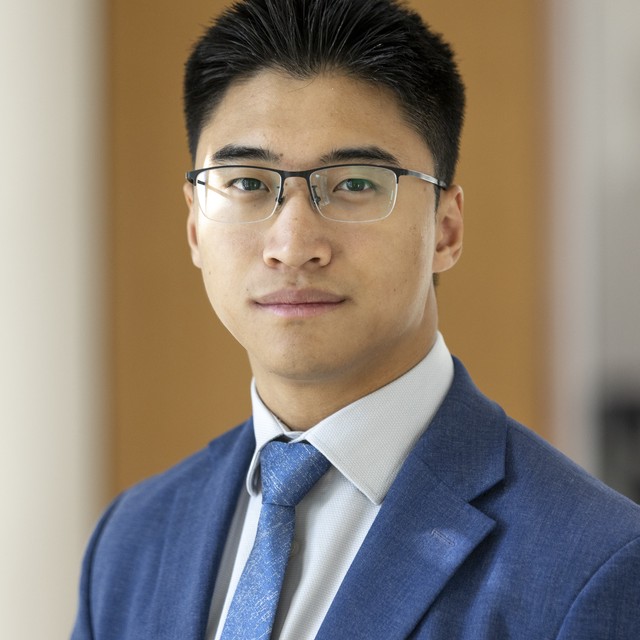 ⚡
I am a Ph.D. student in Electrical Engineering and a Moody Graduate Fellow at Southern Methodist University, having completed my M.S. in Computer Science (GPA: 3.96 / 4.0) with a thesis on predictive natural language metrics of Alzheimer’s Disease and cognitive decline. I previously conducted research as a Research Scientist Intern at the Chief Data Office of AT&T.
My research spans the intersection of machine learning systems, foundation model alignment, and scientific computation. Specifically, my work focuses on:
Beyond research, I serve as President of the SMU Artificial Intelligence Club, where I lead technical workshops deconstructing modern architectures (FlashAttention, RoPE, Linear Attention, GRPO), and as Recording Secretary for the IEEE-Eta Kappa Nu (IEEE-HKN) Delta Omicron Chapter.
Ph.D. in Electrical Engineering (Moody Graduate Fellow)
Southern Methodist University
M.S. in Computer Science
Southern Methodist University
B.S. in Computer Science, B.S. in Data Science, B.A. in Mathematics
Southern Methodist University
I am a Ph.D. student in Electrical Engineering and a Moody Graduate Fellow at Southern Methodist University, having completed my M.S. in Computer Science (GPA: 3.96 / 4.0). My research centers on machine learning pre/post-training & alignment, low-precision inference acceleration (NVFP4/FP8), agentic AI architectures (MCP, GraphRAG), and generative modeling across video generation and quantum systems.
Master’s Thesis & Cognitive Health: Investigated predictive natural language metrics of Alzheimer’s Disease and longitudinal cognitive decline trend analysis under Dr. Jennifer Dworak, Dr. Eric Larson, and Dr. Jia Zhang. Developed resource-efficient representation geometry and explainability methods for clinical narratives.
Industry Research at AT&T (Chief Data Office): As a Research Scientist Intern in Summer 2026, engineered an adaptive semantic LLM cascade router slashing enterprise inference costs by 35%. Pre-trained an edge-capable small language model (SLM) using Tiny Recursive Model (TRM) architectures with recursive weight-tying, cutting memory by 50%. Investigated out-of-distribution generalization in Supervised Fine-Tuning (SFT) to mitigate the knowing-to-doing gap.
Generative Trajectory Modeling & Protein Dynamics: Designed and trained conditional diffusion generative models on Slurm HPC clusters to sample continuous molecular dynamics and biomolecular trajectories, bypassing computationally expensive QM/MM calculations. Published in the Journal of Chemical Theory and Computation (ACS, 2026) with Dr. Peng Tao and released the open-source PyTAO library.
Language-Based Psychological Assessment & Healthcare NLP: Developed transformer fine-tuning and hierarchical RNN architectures for modeling personality traits and clinical pathology from life narrative interviews under Dr. Mehak Gupta. Published in Journal of Psychopathology and Clinical Science (APA, 2025), Frontiers in Artificial Intelligence (2026), and NAACL NLP4DH (2025).
Agentic GraphRAG Recommender Systems: Funded by the Robert Mayer Undergraduate Research Fellowship, architected an autonomous multi-agent recommendation engine using GraphRAG (Neo4j) and dense vector retrieval (Qdrant) mentored by Dr. Michael Hahsler and Dr. Peter Moore. Published in the AAAI 2025 Spring Symposium Proceedings.
Quantum Computing & Error Mitigation: Developing scalable quantum error detection algorithms using cuQuantum tensor-network statevector sampling to detect single- and two-qubit stochastic Pauli errors under NISQ regimes (journal paper in preparation).
ML Pre/Post-Training & Alignment: Foundation model pre-training (Tiny Recursive Models / TRM), Supervised Fine-Tuning (SFT), Parameter-Efficient Fine-Tuning (LoRA / QLoRA), Alignment (RLHF, GRPO), and multi-GPU Distributed Data Parallel (DDP) scaling on Slurm HPC clusters.
Inference Systems & Low-Precision Acceleration: Custom NVFP4 / FP8 / INT4 quantized GEMM kernel compilation, dynamic precision casting, asynchronous CPU-to-GPU pinned weight offloading, continuous batching (vLLM, PagedAttention), KV cache management, and semantic cascade routing.
Agentic AI & Generative Architectures: Model Context Protocol (MCP), hierarchical multi-agent coordination, tool/function calling, GraphRAG (Neo4j, Qdrant), and Diffusion Transformers (DiT / LTX-2.5) for ultra-low-latency video synthesis.
Quantum Error Detection & Scientific Computing: cuQuantum tensor-network statevector backends, statistical syndrome measurement sampling, NISQ quantum error correction (QEC) verification, and molecular dynamics acceleration.
High-Fidelity AI Video Generation Engine (LTX-2.5): Ultra-low-latency video generation pipeline utilizing the LTX-2.5 Diffusion Transformer (DiT) on NVIDIA RTX 5080 (Blackwell). Compiled custom NVFP4 quantized GEMM kernels, asynchronous pinned-memory layer-wise weight offloading (generating high-res video within 16GB VRAM), and FlashAttention/CUDA Graph execution reducing latency by 42%.
GPU-Accelerated Quantum Error Detection: Simulated quantum circuits with stochastic Pauli errors using cuQuantum tensor-network statevector backends. Implemented statistical sampling algorithms to isolate single- and two-qubit gate errors under NISQ regimes.
Agentic GraphRAG Recommender System: Multi-agent curriculum planning engine combining Neo4j knowledge graphs, Qdrant vector retrieval, and self-hosted vLLM inference endpoints with human-in-the-loop (HITL) verification, handling 2,000+ concurrent queries (published at AAAI 2025).
Custom AI Development IDE & Agent Runtime: Extensible AI development environment integrating the Model Context Protocol (MCP) to orchestrate complex multi-step tool-calling workflows across local and cloud LLMs, backed by an AWS EC2 distributed workflow hub.
Conditional Diffusion Models for Protein Trajectories (PyTAO): Generative conditional diffusion models for continuous biomolecular trajectories bypassing expensive QM/MM calculations (published in ACS JCTC 2026).
Automated Debug Assistant & Concurrency Scheduler OS: LLM-powered debugging assistant in C++ interfacing with Ollama REST APIs, featuring mutex locks, deadlock prevention, and Dask distributed parallelization on Slurm HPC clusters.
SMU Artificial Intelligence Club: President: Leading weekly technical workshops deconstructing FlashAttention, Linear Attention, Stable Diffusion, RoPE, and GRPO; organizing hackathons and GPU training workflows.
Awarded the Moody Graduate Fellowship to pursue Ph.D. in Electrical Engineering at Southern Methodist University.
Our paper on language-based personality assessment from life narratives has been published in Frontiers in Artificial Intelligence.
Our paper on protein trajectory sampling with conditional diffusion models has been published in ACS JCTC.
AI Assistant for Socioeconomic Empowerment Using Federated Learning: published to NLP4DH, organized with NAACL 2025, May 2025